誰がGrigory Potemkinとデートしましたか?
エカチェリーナ2世 日付の Grigory Potemkin ? から ?. まで 年齢差は 10 年 4 か月 22 日.
Grigory Potemkin
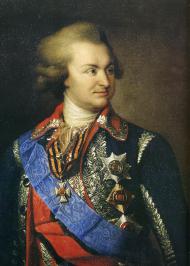
Prince Grigory Aleksandrovich Potemkin-Tauricheski (11 October [O.S. 30 September] 1739 – 16 October [O.S. 5 October] 1791) was a Russian military leader, statesman, nobleman, and favourite of Catherine the Great. He died during negotiations over the Treaty of Iași, which ended a war with the Ottoman Empire that he had overseen.
Potemkin was born into a family of middle-income landowners of Russian nobility. He first attracted Catherine's favor for helping in her 1762 coup, then distinguished himself as a military commander in the Russo-Turkish War (1768–1774). He became Catherine's lover, favorite and possibly her consort. After their passion cooled, he remained her lifelong friend and favored statesman. Catherine obtained for him the title of Prince of the Holy Roman Empire and gave him the title of Prince of the Russian Empire among many others: he was both a Grand Admiral and the head of all of Russia's land and irregular forces. Potemkin's achievements include the peaceful annexation of the Crimea (1783) and the successful second Russo-Turkish War (1787–1792), during which the armed forces under his command besieged Ochakov.
In 1775, Potemkin became the governor-general of Russia's new southern provinces. An absolute ruler, he worked to colonize the wild steppes, controversially dealing firmly with the Cossacks who lived there. He founded the towns of Kherson, Nikolayev, Sevastopol, and Yekaterinoslav. Ports in the region became bases for his new Black Sea Fleet.
His rule in the south is associated with the (probably mythical) "Potemkin village", a ruse involving the construction of painted façades to mimic real villages, full of happy, well-fed people, for visiting officials to see. Potemkin was known for his love of women, gambling and material wealth. He oversaw the construction of many historically significant buildings, including the Tauride Palace in Saint Petersburg.
続きを読む...エカチェリーナ2世

エカチェリーナ2世(エカチェリーナ2世アレクセーエヴナ、ロシア語: Екатерина II Алексеевна, ラテン文字転写: Yekaterina II Alekseyevna (イカチリーナ・フタラーヤ・アレクセーエヴナ)、1729年4月21日(ロシア暦)/5月2日(グレゴリオ暦) - 1796年11月6日(ロシア暦)/11月17日(グレゴリオ暦))は、ロマノフ朝第8代ロシア皇帝(女帝)。在位は1762年6月28日(ロシア暦)/7月9日(グレゴリオ暦) - 1796年11月6日(ロシア暦)/11月17日(グレゴリオ暦)。夫は第7代皇帝ピョートル3世ならびにグリゴリー・ポチョムキン(秘密結婚)、子は第9代皇帝パーヴェル1世ほか。ドイツ語では「カトリーナ2世(Katharina II)」英語では「キャサリン2世(Catherine II.)」 とも呼ばれる。
プロイセンのフリードリヒ2世(大王)やオーストリアのヨーゼフ2世と共に啓蒙専制君主の代表とされる。ロシア帝国の領土をポーランドやウクライナに拡大し、大帝(ヴェリーカヤ、Вели́кая)と称される。
帝政時代にロシア帝国国立銀行が発行していた100ルーブル紙幣の肖像に描かれていたほか、沿ドニエストル共和国の国立銀行が発行する500沿ドニエストル・ルーブルにも描かれていた。
続きを読む...